
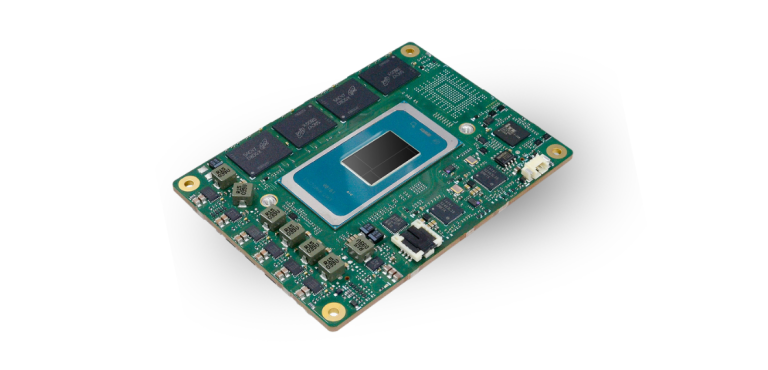
Products
Industrial System on Modules for scalable embedded systems
Our partners & Brands












Custom System on Modules for embedded solutions
A System on Module (SoM) is a compact computing module that integrates essential components such as the processor, memory and power management on a single board. It is designed to be mounted on a carrier board, allowing application-specific interfaces to be added without redesigning the core computing platform. This modular approach provides a stable and flexible foundation for embedded systems that require scalability and long-term continuity.
System on Modules are widely used in industrial, automotive and embedded applications where development timelines, technical risk and lifecycle requirements must be carefully managed. By keeping the computing core separate from application-specific I/O, system architectures remain adaptable while changes to the underlying hardware platform are minimised.
At Intemo, we support the selection of System on Modules that align with your application requirements, chosen architecture and lifecycle expectations. This helps ensure a reliable embedded platform that supports hardware continuity.
Why choose Intemo?
-
Reliable Box PCs built for long-term industrial and automotive use.
-
Flexible configurations assembled in-house when your project requires specific adjustments.
-
Support from specialists who help you select the right system for your application.
-
Over 35 years of experience serving a wide range of customers across Europe.

“It also needs to be technically correct, producible and, above all, user friendly.”
System on Modules as a scalable foundation for embedded systems
In embedded system development, an industrial System on Module acts as the fixed computing core of the platform. Engineers can focus on designing and optimising the carrier board for application-specific requirements, while relying on a proven and validated computing module for processing, memory and power management.
This approach helps reduce development time and limits technical risk. When performance requirements change or new processor generations become available, the carrier board can often remain unchanged while the System on Module is updated within the same product family. As a result, System on Modules are particularly suited for long-running industrial projects where controlled evolution and platform stability are essential.
Standardised form factors and long-term availability
System on Modules are available in established industry standards such as COM Express, Qseven, SMARC and OSM. These standardised form factors define mechanical dimensions, pinouts and interfaces, making it easier to source compatible modules from trusted long-lifecycle System on Module manufacturers.
Working with recognised standards supports long-term availability. It also helps avoid vendor lock-in and reduces redesign effort when a platform needs to be refreshed or scaled over time.
FAQ
Frequently Asked Questions
A System on Module (SoM) is a compact computing module that integrates the core components of an embedded system, such as the processor, memory and power management. The module is mounted on a carrier board that provides the application-specific I/O and connectors. A single-board computer (SBC) combines both the computing core and the I/O on a single board and can be used as a standalone system. The key advantage of a SoM is that the computing module is separated from the application-specific hardware, making the system more flexible and easier to maintain or upgrade over its lifecycle.
An industrial System on Module is well suited for applications where long-term availability, compact design and controlled system evolution are important. Typical use cases include industrial automation, machine control, transportation systems, medical equipment and embedded gateways. These applications benefit from the modular architecture of a SoM, as it allows hardware updates or performance scaling without redesigning the complete system.
Customisation of a SoM is mainly handled at manufacturer level. Intemo works with established System on Module manufacturers that offer a wide range of options in processor choice, memory size, storage type and supported interfaces. Based on your OEM design requirements, we help select the most suitable SoM platform and configuration. Application-specific I/O and functionality are typically implemented on the carrier board, allowing the core module to remain standard and stable.
System on Modules used in industrial applications are designed for long-term availability. Many platforms follow extended lifecycle roadmaps, often spanning ten years or more, depending on the manufacturer and processor family. Intemo supports the selection of System on Modules with predictable availability and controlled revisions. This helps prevent unexpected hardware changes and supports consistent production, deployment and maintenance throughout the lifecycle of your embedded system.
Industrial System on Module platforms typically support common embedded operating systems such as Linux distributions and Windows IoT. Support depends on the selected processor architecture and manufacturer. We advise on platform compatibility to ensure the chosen SoM aligns with your software environment, performance requirements and long-term support expectations.
Thermal behaviour, power efficiency and reliability are key design considerations for industrial System on Modules. These modules are engineered to operate within extended temperature ranges and under continuous load. By selecting the appropriate SoM platform and combining it with a well-designed carrier board, thermal performance and power consumption can be controlled at system level. Intemo supports this selection process to ensure stable operation in demanding industrial environments.
Intemo is not a System on Module manufacturer, but a specialised supplier and advisor. We work with established System on Module manufacturers and focus on long-term availability, platform stability and practical integration support. Customers value our technical guidance during the early design phase, clear communication and experience with long-running industrial projects. This helps reduce design risk and ensures the selected System on Module remains viable throughout the full lifecycle of the embedded system.

Need expert advice?
Get in touch with our experts for all your System on Module questions
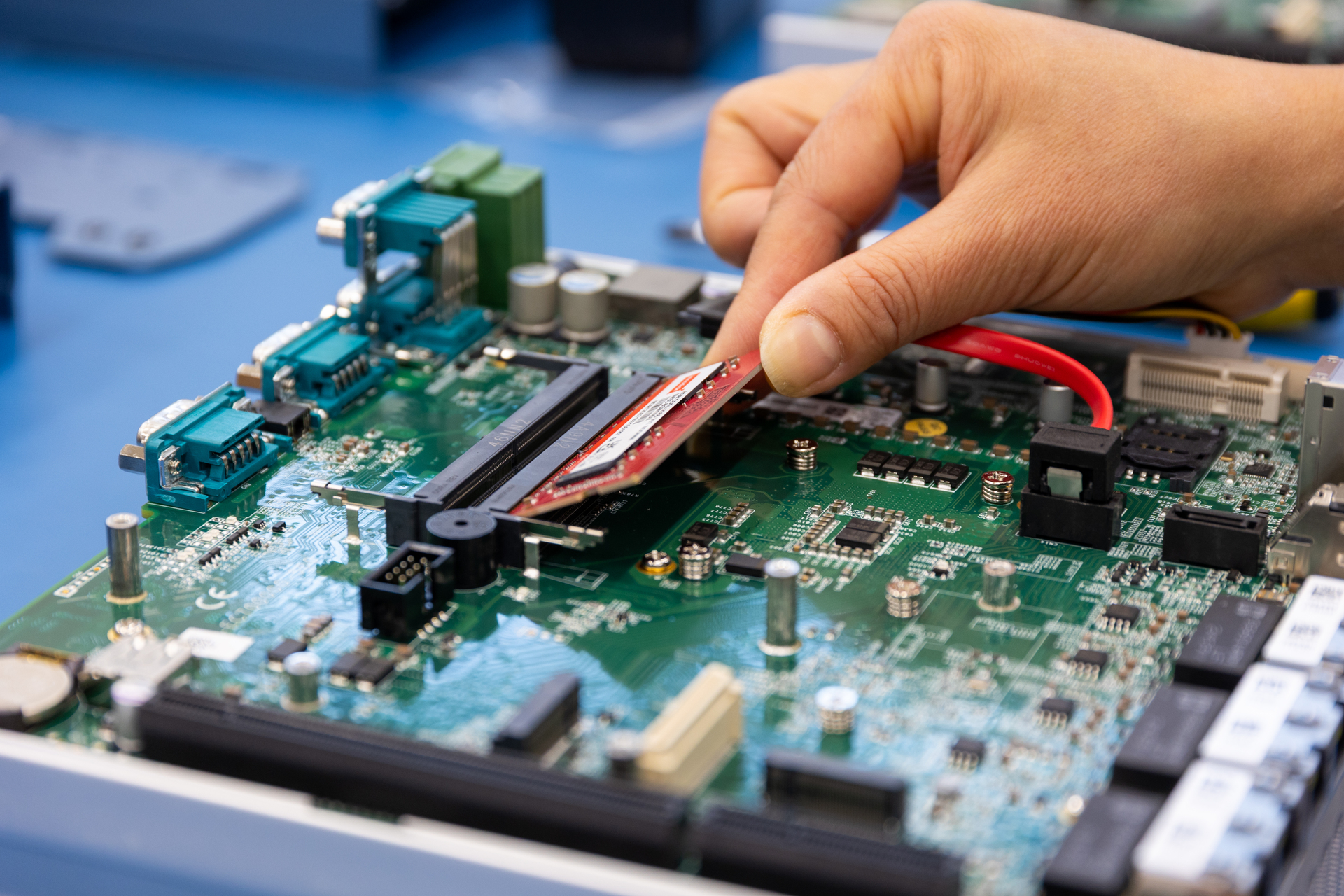
R&D
Research & Development: in-house development driven by technology
Why Intemo is your System on Module partner
As an experienced supplier of System on Modules, Intemo supports customers in selecting the right SoM for their embedded platform. By working closely with leading System on Module manufacturers, Intemo ensures platform stability, predictable roadmaps and reduces design risk.
When your application requires specific choices in performance, form factor or roadmap alignment, we help you make the right selection early in the design phase. This ensures the System on Module fits seamlessly into your carrier board design and supports reliable deployment over the full lifetime of your embedded system.